Von Joneschilds Residence
Montpelier, Vermont
Completed 2025
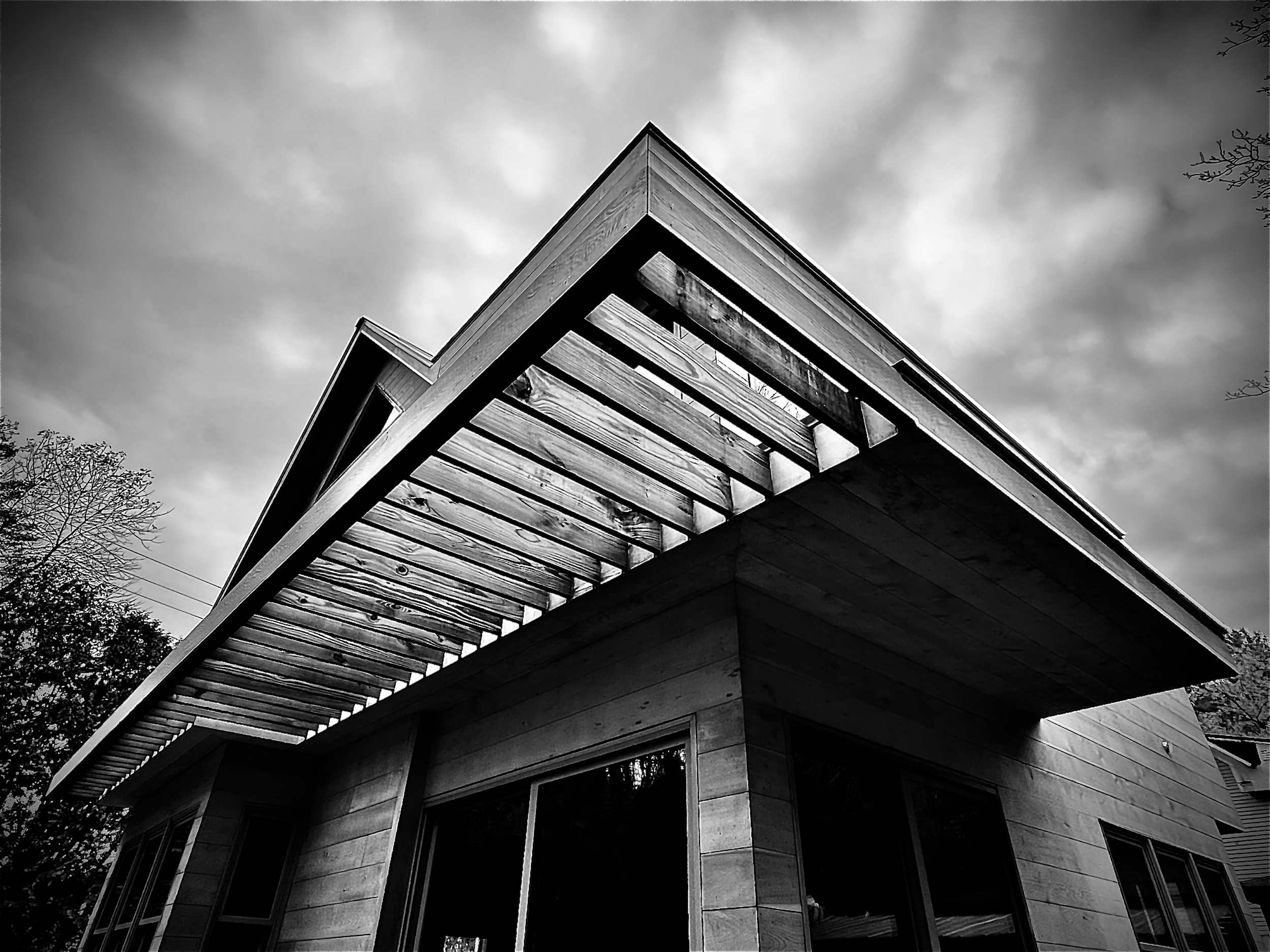
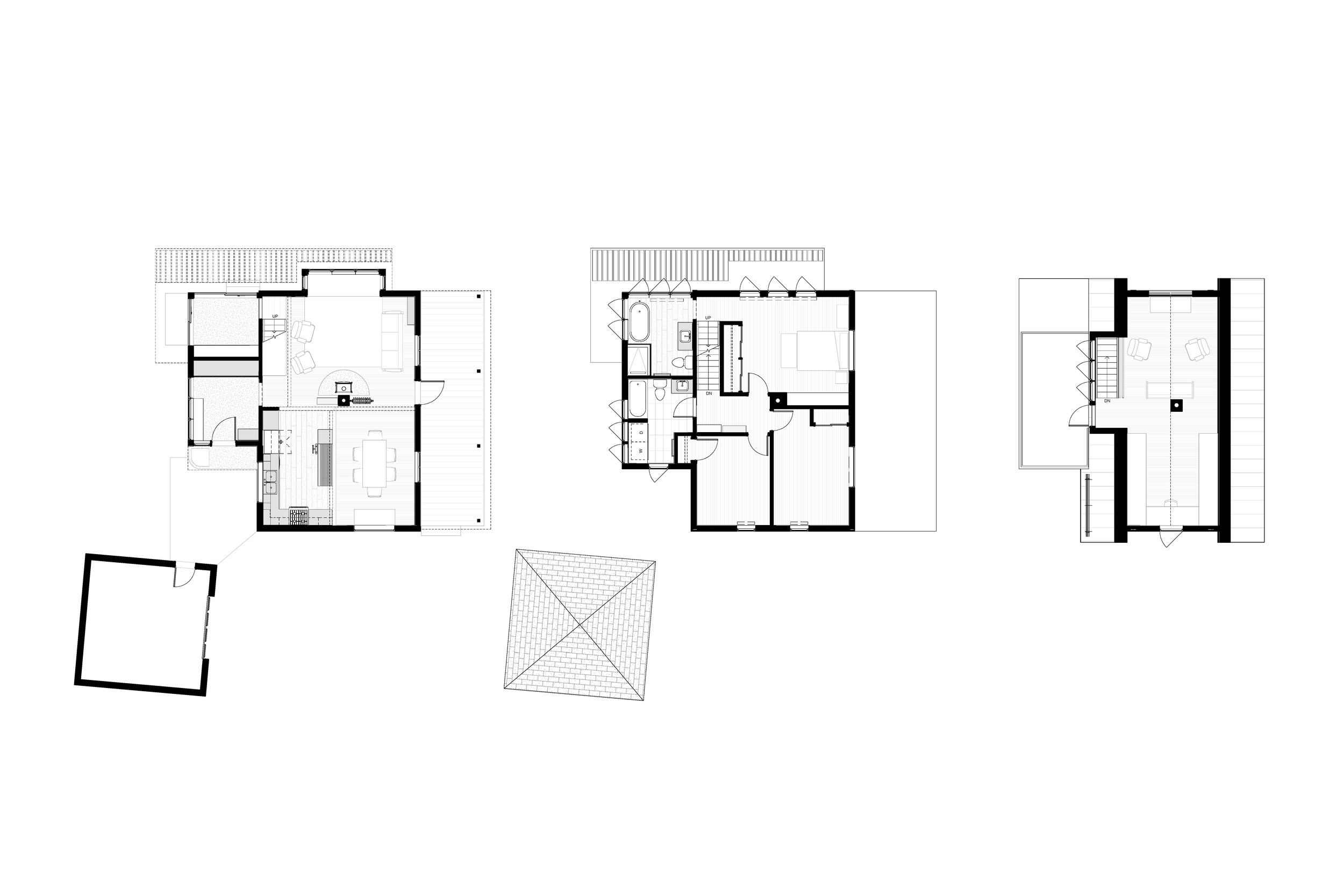
Upon returning to Vermont, Bryan and his wife undertook the renovation of a modest 1,000 SF 1850s “factory-worker” house. What began as a renovation became an exercise in how much a small existing home could accommodate through careful planning, construction, and design.
The principal idea was to live as large as possible in the modest 1,000 SF house. To achieve this, a major plan reorganization and small addition were needed to optimize use and expand the sense of space.
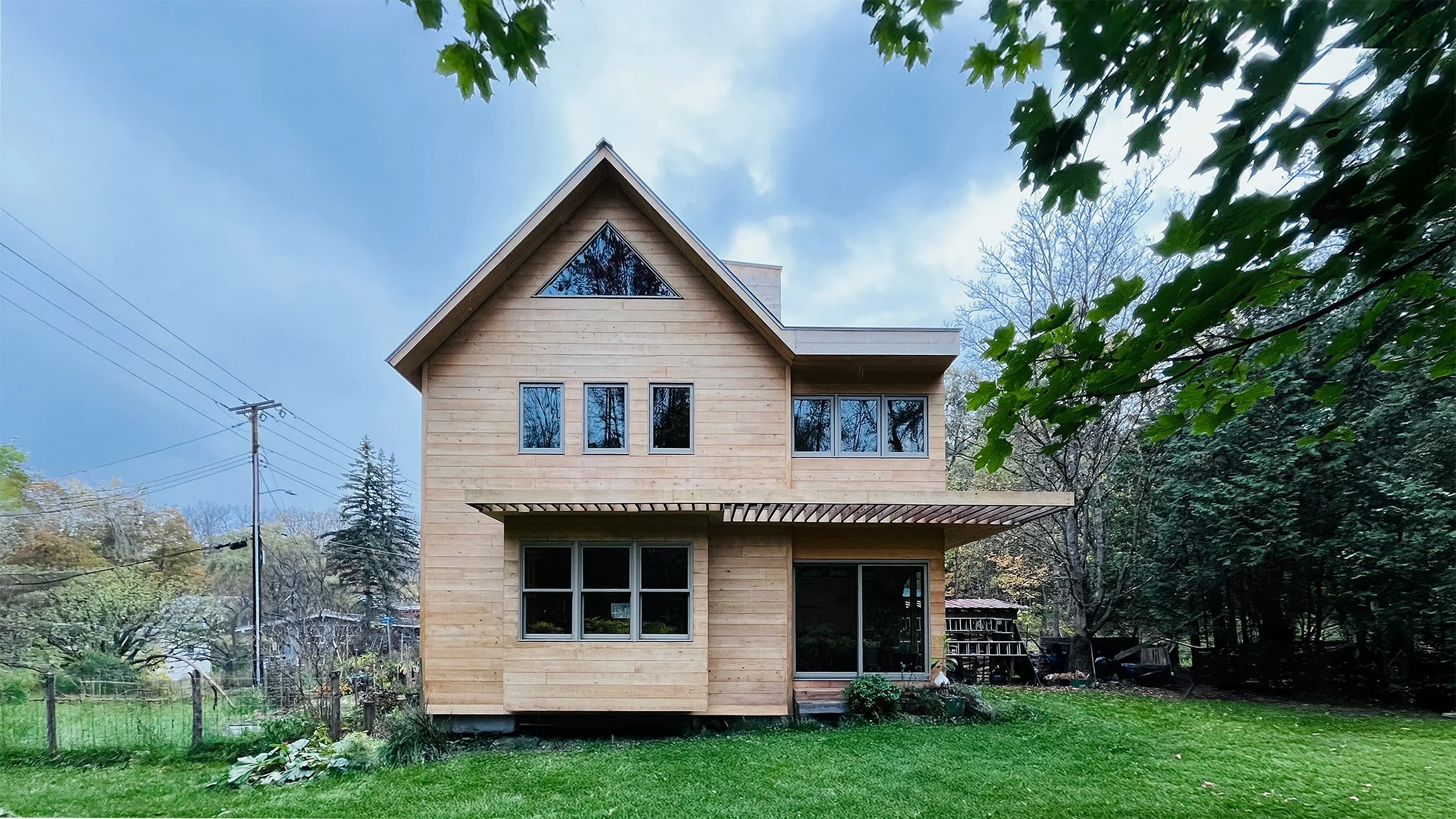
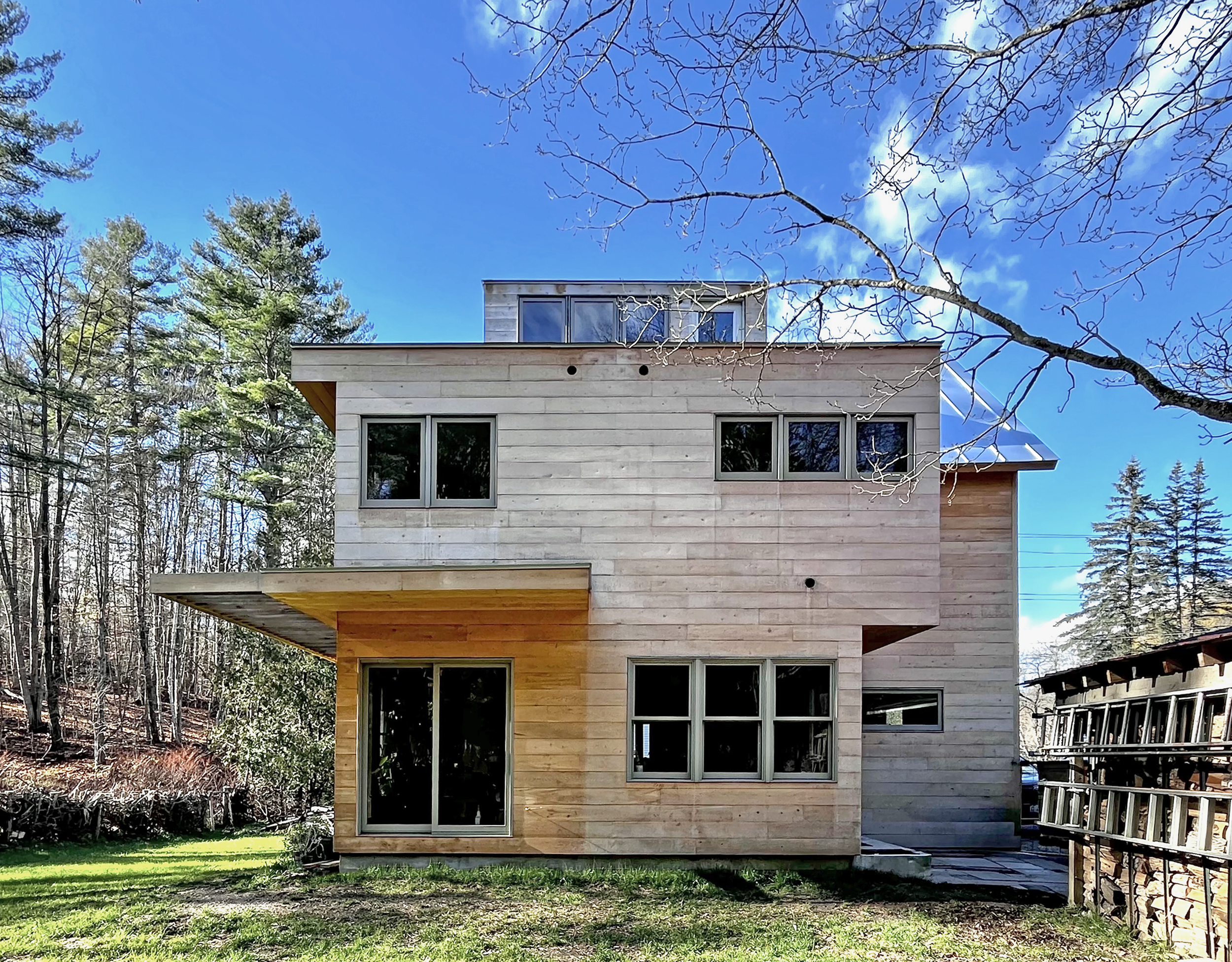
To begin, they demolished an eastern porch to create, in its place, a 500 SF two-story addition containing all of the needed service spaces: entry “mudroom,” sunroom, and two bathrooms, one being a private en-suite and the other a guest/family bathroom. Moving the family bathroom from the first floor to the second opened the first floor to a more generous plan. With the expansion of their family, the renovation of the third-floor attic was also needed, adding 400 SF of flexible space and a roof deck oriented toward the site.
Together, the addition and attic renovation increased the home’s usable area from approximately 1,000 SF to 1,800 SF, while much of the original house remained in place.
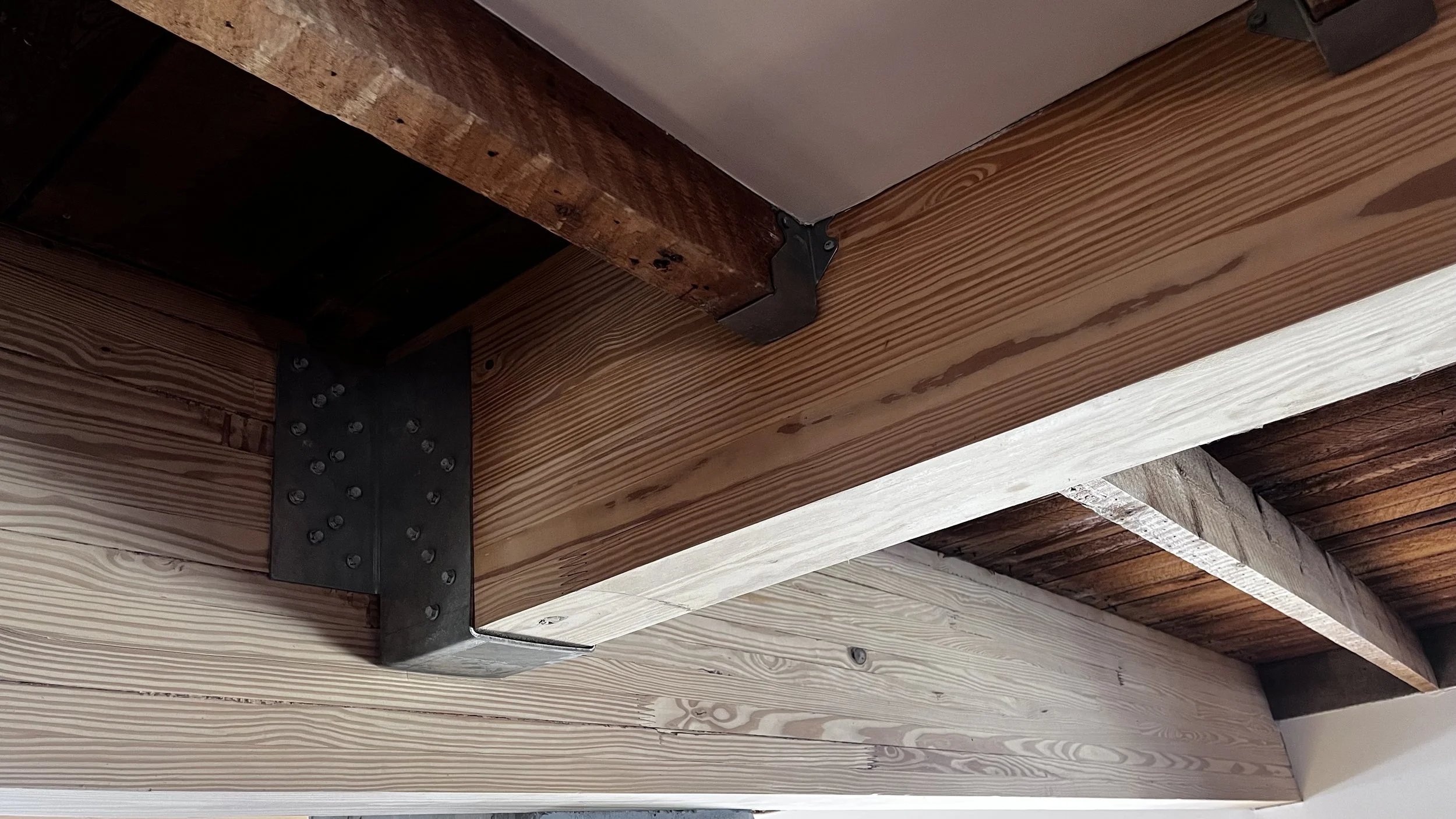
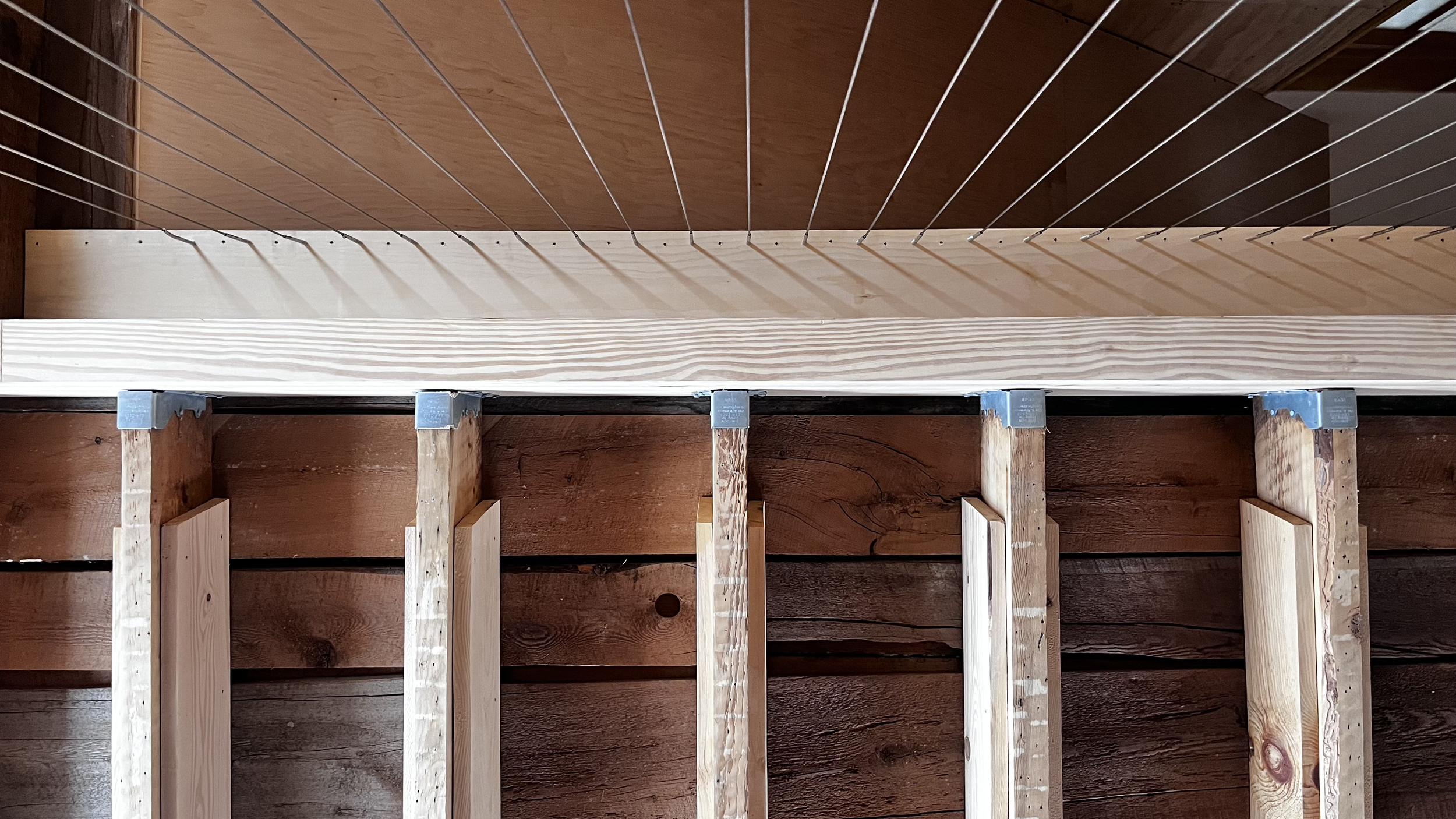
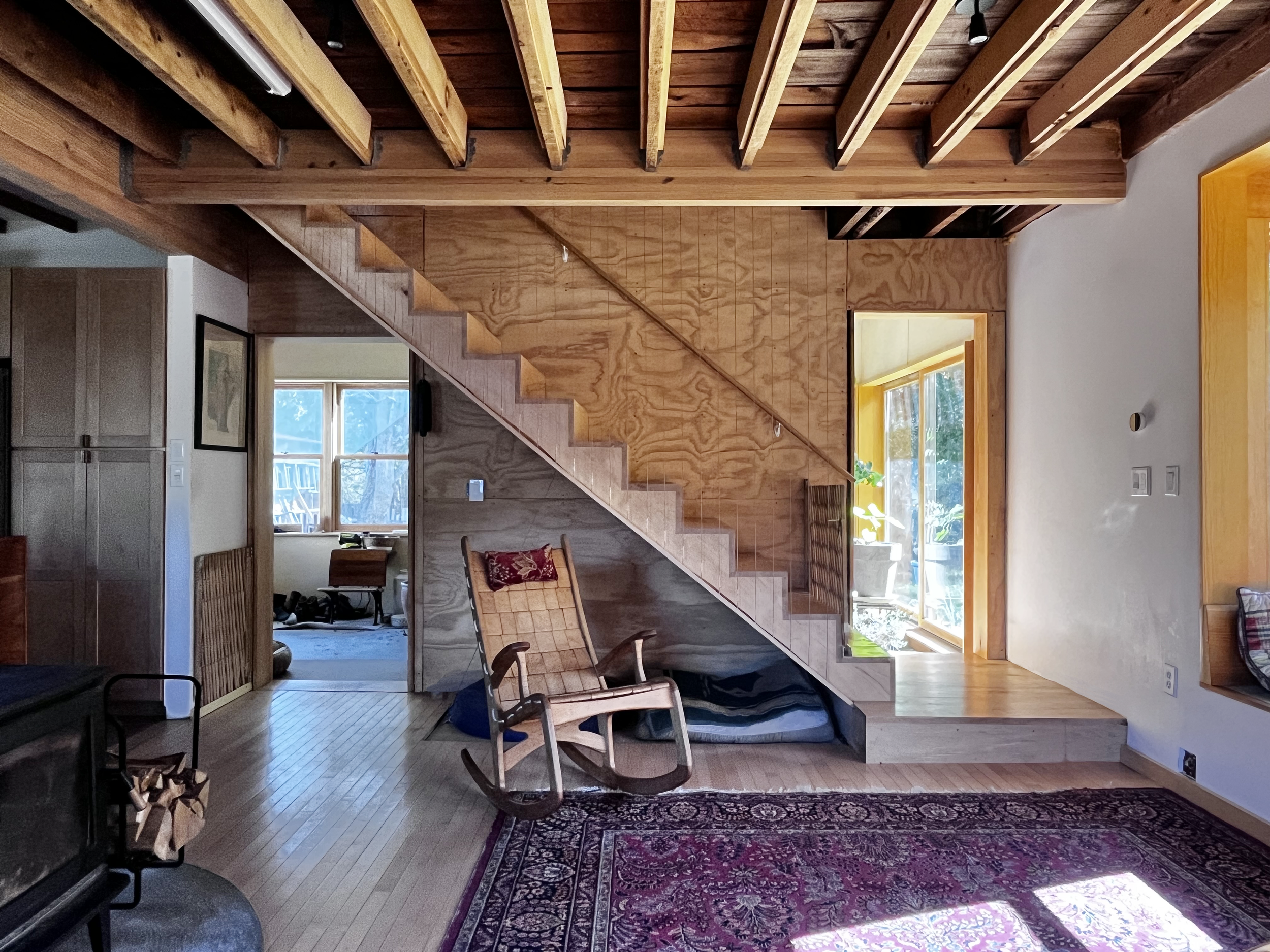
Relocating the service spaces to an ancillary “service box,” clean and contemporary in its massing, and employing several glulam beams to support second-story and roof loads above, freed the first floor to create an open plan with a spacious kitchen, dining room, and cozy living room—all organized around a central wood stove.
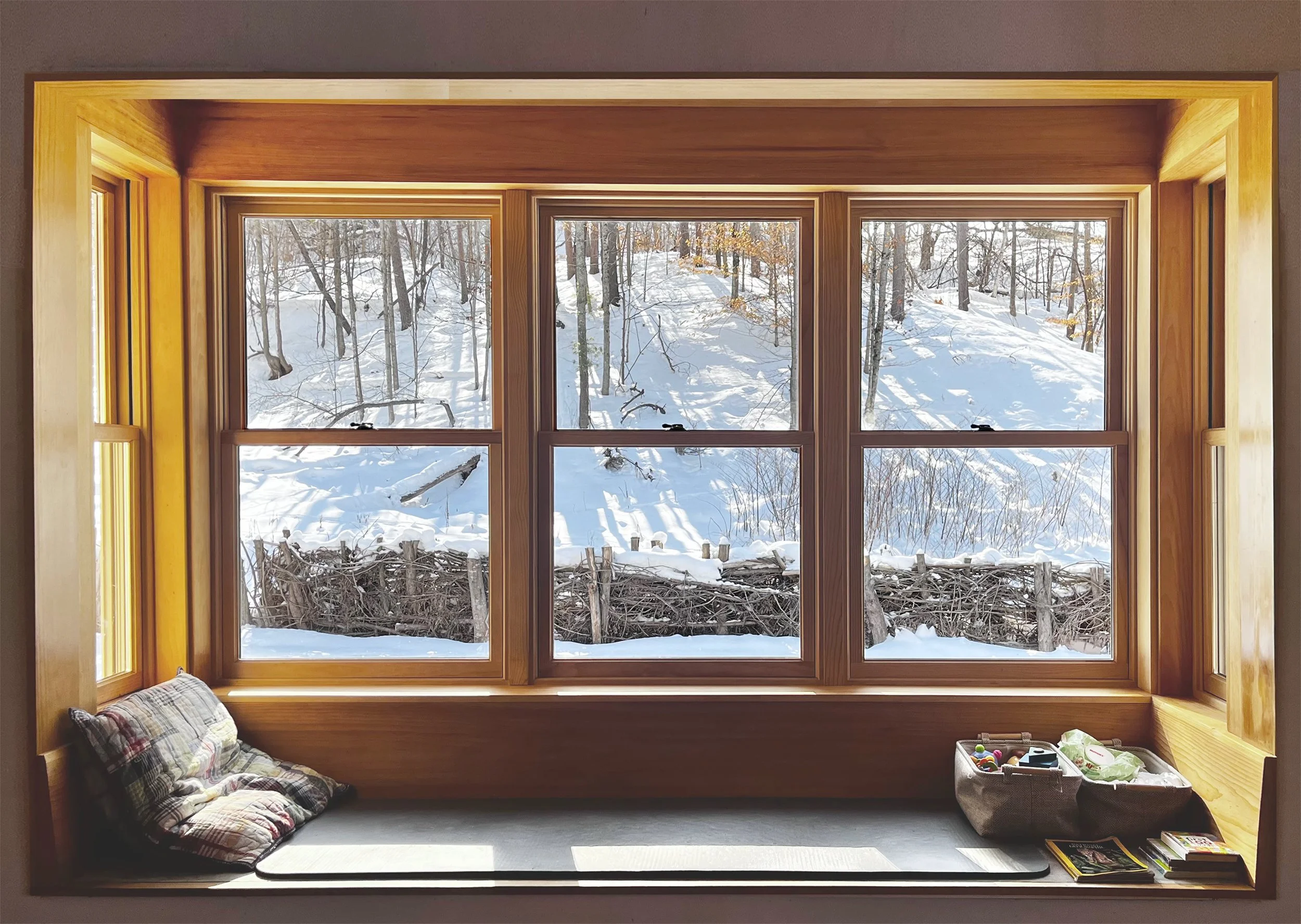
The addition of a large bay window on the southern side of the house expands the living space further as an oculus, illuminating the living room and connecting occupants to the landscape with wide views into the private wooded hillside. An intermediate space, floating between indoors and outside, the bay window becomes a center stage for family life, with radiant heat beneath.
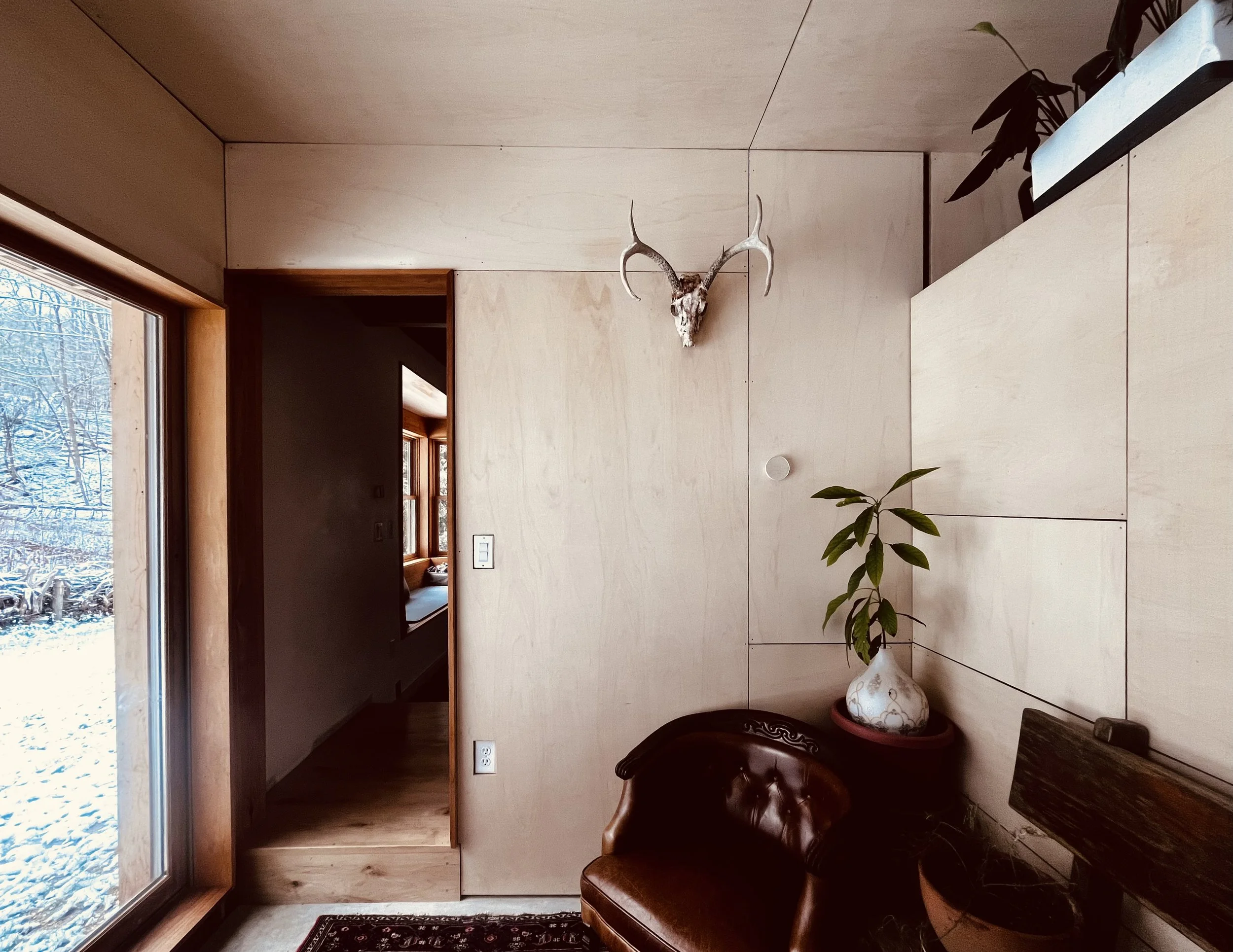
It too is centered in constant balance with the large central wood stove, which anchors all primary spaces. A small sunroom and “sitting room” further open the house to the rear yard and woods, creating places of quiet repose throughout the seasons.
To improve the connection to the site throughout, wide eye-level “ribbon” windows replaced existing narrow windows—to maintain privacy, create panoramic views, and spread light up and across rooms.
Unlike most of the house, the second-floor plan remained largely untouched, with only closets being added to improve each of the three bedrooms. Mold in the existing plaster, from the constantly humid regional climate, combined with lead in the existing floor paint, necessitated that the majority of finishes be redone. What could be salvaged was celebrated, including exposed rough-sawn timbers and decking in ceilings and details throughout.
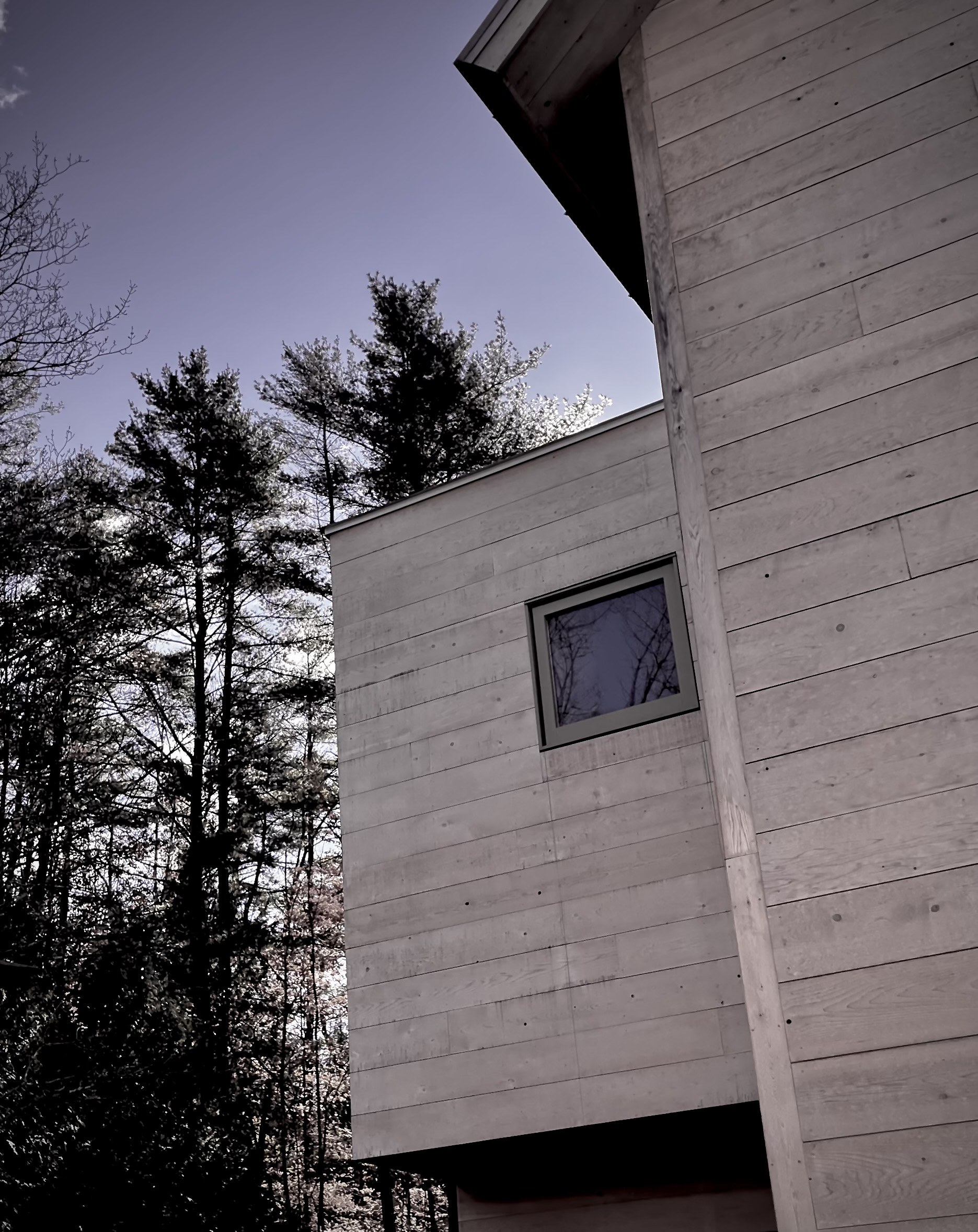
An energy retrofit was also necessary to counter the extreme and often unpredictable weather of Vermont’s central valley. Exterior insulation now blankets the entire house, protected by a rainscreen of locally milled northern cedar. Daily heating needs are met primarily by a wood stove, while an 80-gallon heat-pump water heater provides backup and shoulder-season heat through a hydronic system of new and salvaged radiators and radiant floor slabs.
The building’s massing is consistent with the neighboring two 1850s-era factory-worker houses, each incorporating a large front porch and rear additions on the east side of the 2½-story New England vernacular “gable box.” Following this “pattern of the place,” the home’s size, scale, and organization fit within the row of original houses, with its new, locally milled northern cedar siding casting it as a type of contemporary cabin.
From the street, the addition initially reads as a quiet continuation of the neighborhood’s familiar gable-box houses. Moving toward the rear yard, its contemporary character becomes more apparent: a deliberate contrast between the original house and the new spaces added to it.
The home stands as an addition to New England’s vernacular housing language—a demonstration of how a modest existing structure can accommodate contemporary family life without losing its relationship to place. Through careful planning, local materials, construction ingenuity, and selective expansion, 1,000 SF became a home capable of living much larger.
Project Team
Skyplane Studio Architects
Bryan D. Jones
Sellers Treybal Structural Engineers
JA Gould Plumbing & Heating
Gouge Electric
Grandfield Masonry
Til’ Dark Roofing
Architect
Builder
S. Engineer
Plumber
Electrician
Framing
Roofing