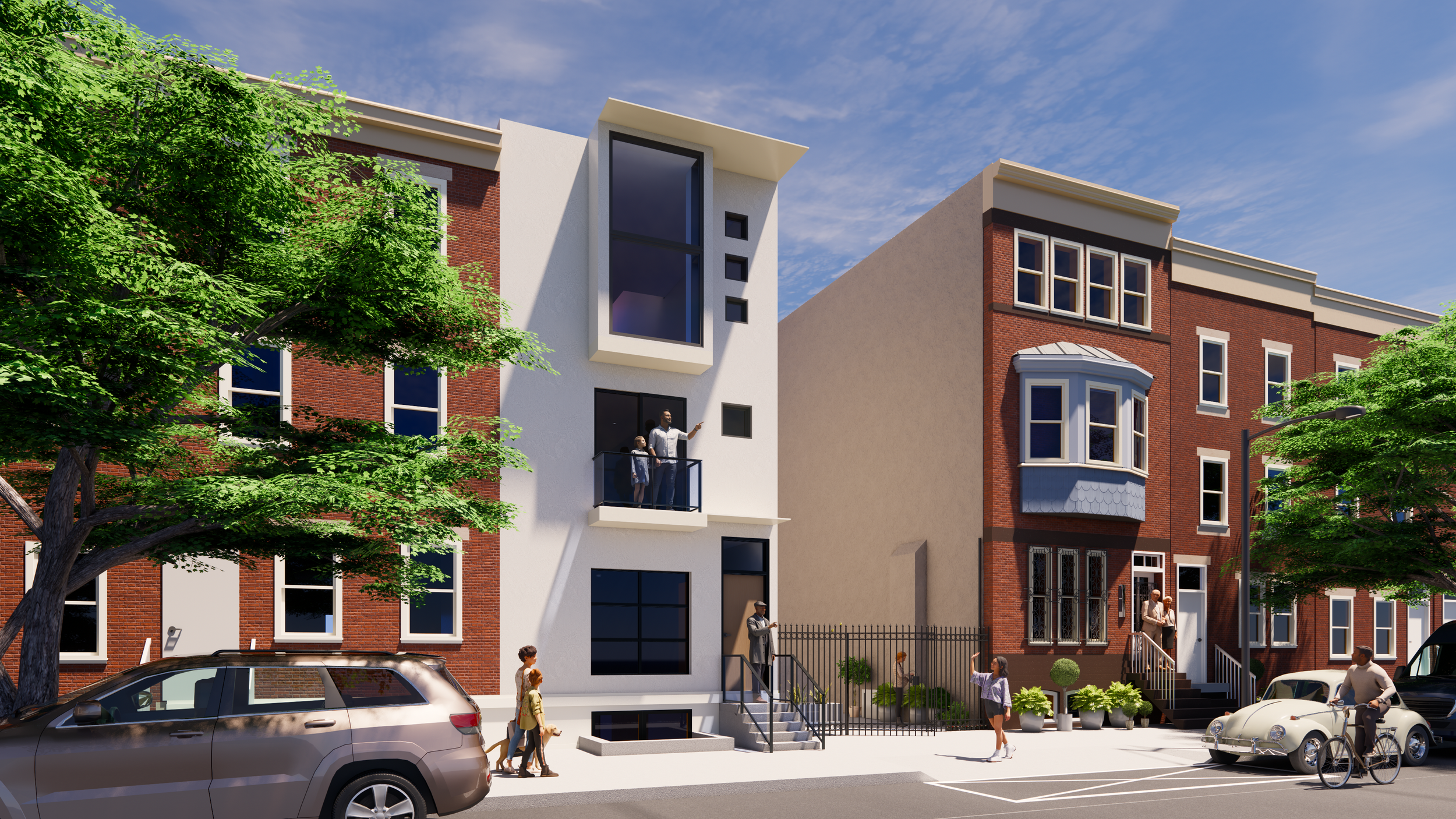
A Corinthian Contemporary
Philadelphia, PA
In Construction

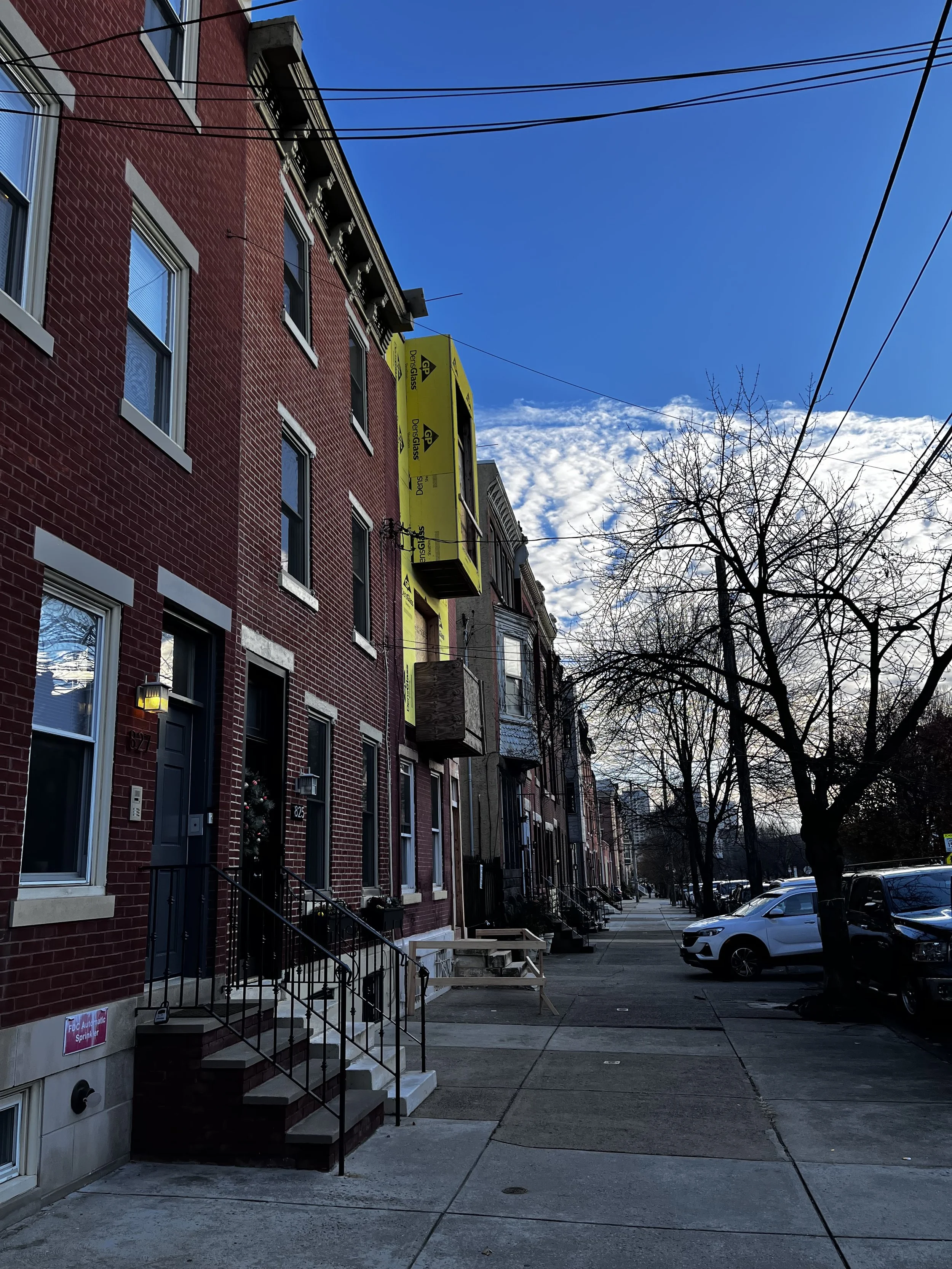
How does one reimagine the vernacular rowhouse?
Not by rejecting its lineage or its context, but by engaging it—carefully, critically, and in full view of its neighbors.
This contemporary urban infill project reconsiders the typology of the Philadelphia rowhouse through restraint, proportion, and material contrast rather than formal disruption.
Developed in phases over three years, the project stabilizes and reprograms an existing structure—transforming a single-family dwelling into three residential units—while using the façade as a site of architectural inquiry.
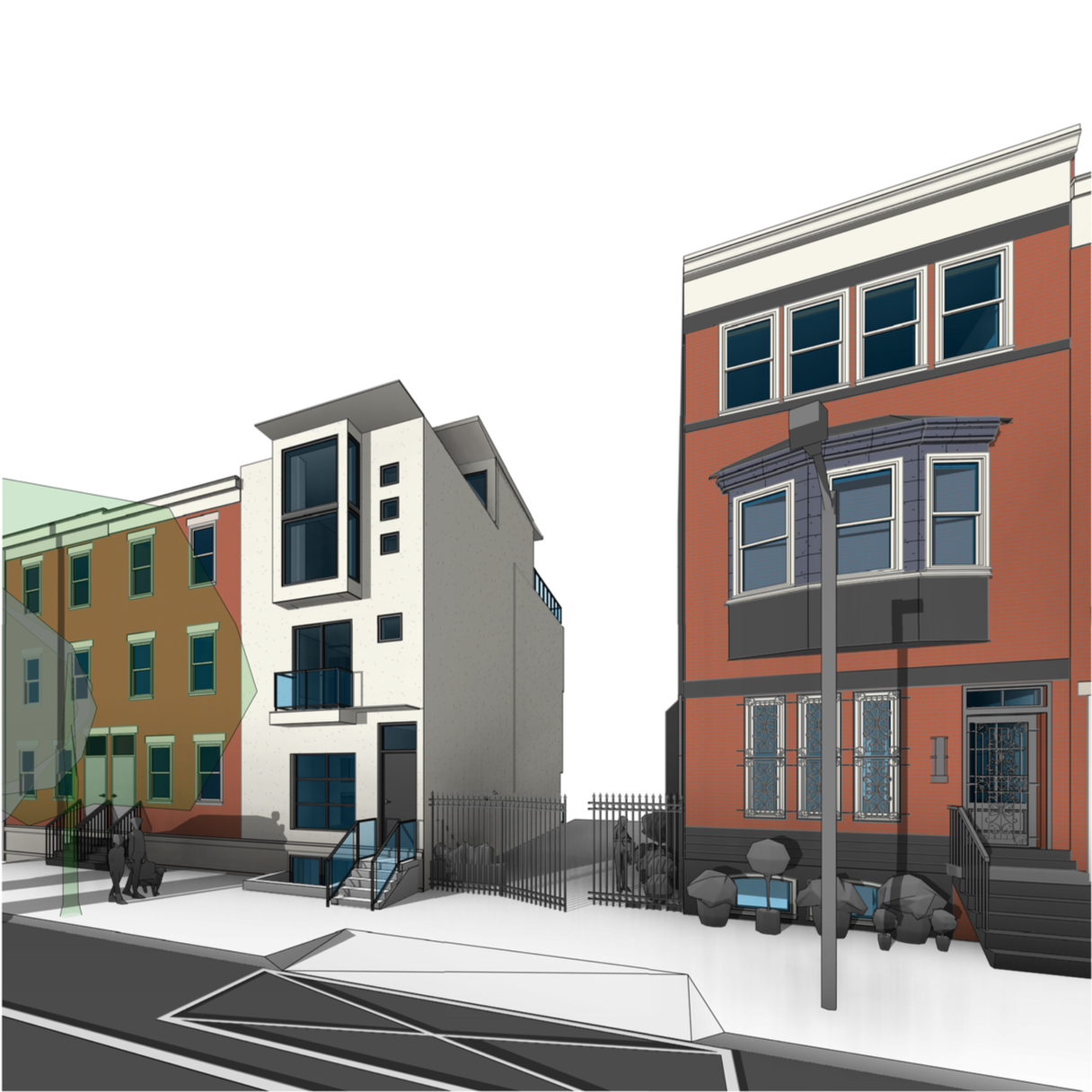
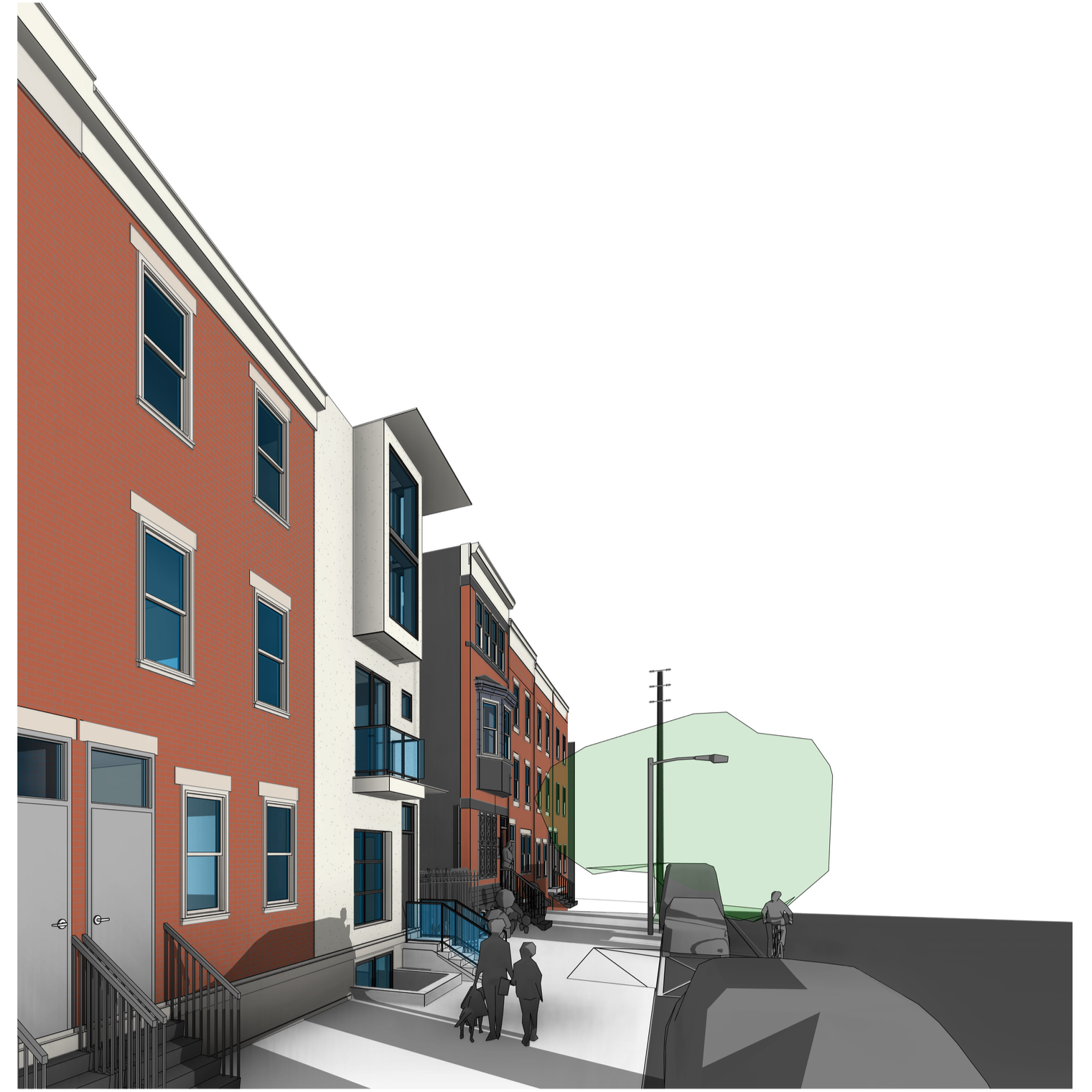
Situated between traditional masonry neighbors, the building occupies a narrow but legible interval in the row. A vacant lot to the south functions as a temporal and visual pause, allowing the new façade to enter into a measured dialogue with its context rather than compete with it.
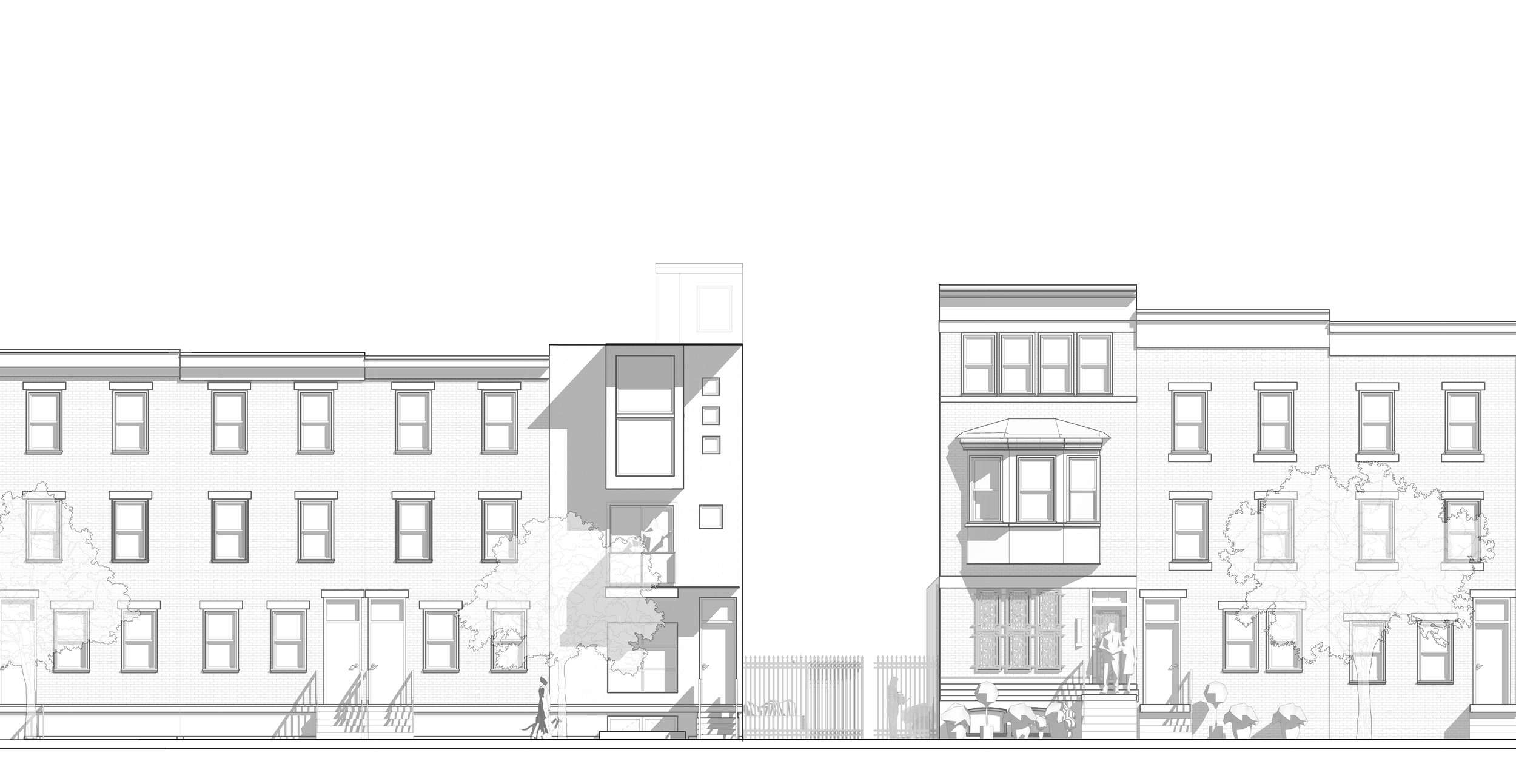
The project neither mimics nor rejects its surroundings; instead, it establishes continuity through alignment, scale, and cadence, while introducing a contemporary language rooted in abstraction and control.
The façade is composed as a disciplined arrangement of planar surfaces and fenestration, organized to express interior function while maintaining an outward compositional logic.
Sculptural volumes emerge where spatial needs press outward—most notably at the bay—counterbalanced by moments of deliberate quiet. The progression of windows ascends with increasing precision, culminating in a playful yet resolved composition of smaller openings that register as punctuation rather than ornament.
Thin cantilevered metal plates—forming both entry canopy and upper cornice—frame the elevation with an economy of means. These elements operate less as decoration than as architectural notation: lines that register entry, termination, and human scale.
Their material restraint reinforces the project’s broader ambition to earn expression through proportion and tectonic clarity rather than applied embellishment.
Material contrast plays a central role. Against the historic masonry of its neighbors, the façade asserts a contemporary identity without spectacle.
Its surface operates through rhythm, repetition, and variation, calibrated across the elevation. In this way, the project subtly engages the legacy of the Corinthian order—not through literal reference, but through an abstracted concern for hierarchy, balance, and measured ornament.
The result is a building that belongs by contrast.
It creates a pause in the row, offering a moment of reflection on the vernacular while remaining firmly of its time.
Composed with restraint and attention to human scale, the façade demonstrates how contextual modernism can emerge not from imitation or provocation, but from careful observation, proportion, and architectural intent.
Project Team
Owner
Architect
Project Management
Structural Engineer
Mechanical Engineer
Emerson Maia
Skyplane Studio Architects
Bryan D. Jones
Larsen & Landis
J&M Engineering